
If you are an autistic or neurodivergent person, you have likely spent your entire life being told—directly or indirectly—that you are “bad” at communicating.
Maybe you’ve been told you are rude when you were just trying to be honest. Maybe you’ve been accused of having “no empathy” because you didn’t react to sad news in the way someone expected. Maybe you’ve spent years in “social skills” training, learning to make eye contact, smile at the right time, and ask polite questions, only to still feel like an alien in every social interaction.
For decades, the field of psychology has framed these struggles as a deficit located entirely within the autistic person. The narrative has been: Neurotypical people are the gold standard of social communication, and autistic people are broken versions who need to be fixed.
But what if that narrative is scientifically wrong?
What if the problem isn’t that you don’t speak the language properly, but that you are speaking a different language—one that is just as valid, rich, and empathetic as the other? This is the revolutionary concept known as The Double Empathy Problem.
Defining the Double Empathy Problem
Proposed by autistic researcher Dr. Damian Milton in 2012, the Double Empathy Problem challenges the long-held belief that autistic people lack empathy or social skills. Instead, it posits that communication breakdowns between autistic and non-autistic people are a two-way street.
The theory suggests that:
-
Neurotypical people struggle to understand the minds, feelings, and communication styles of autistic people.
-
Autistic people struggle to understand the minds, feelings, and communication styles of neurotypical people.
It is a mutual disconnect. It is a clash of cultures, not a failure of one party.
When two neurotypical people interact, they share a similar “operating system.” They intuitively understand the unwritten rules of small talk, eye contact, and subtext. They “get” each other. Interestingly, research has shown that when two autistic people interact, they also share a high degree of understanding. They often communicate effectively, comfortably, and empathically with one another. The “deficit” disappears.
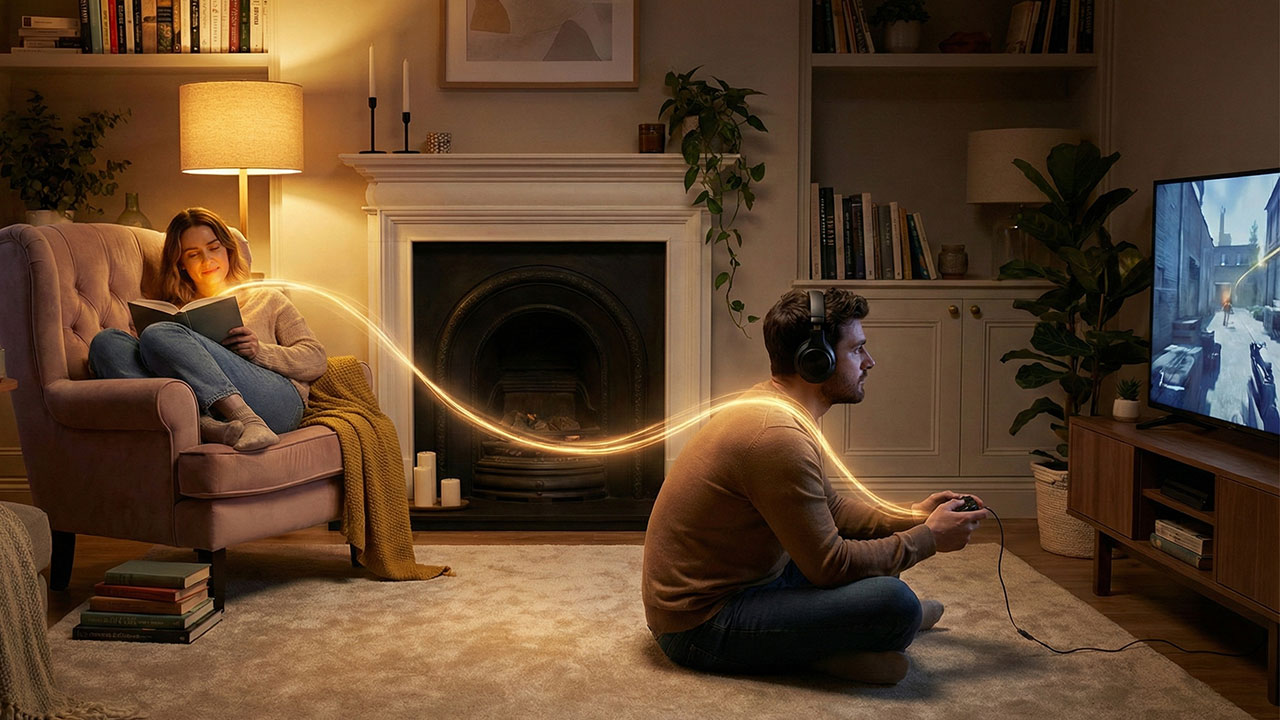
The problem only arises in the “double” scenario—when two people with vastly different neurological experiences try to connect. The disconnect happens in the space between them, yet historically, the blame has been placed entirely on the autistic person.
The “Language Barrier” Analogy
Think of it like a conversation between a native English speaker and a native French speaker. If they try to talk and cannot understand each other, we don’t say the French speaker has a “communication deficit.” We don’t diagnose them with “Expressive Language Disorder” because they aren’t speaking English. We simply acknowledge that they speak different languages.
The Double Empathy Problem applies this logic to neurology.
-
Neurotypical Communication tends to be high-context. It relies heavily on subtext, tone, facial expressions, and “reading between the lines.” Politeness often overrides direct truth.
-
Autistic Communication tends to be low-context. It is often literal, direct, and honest. Information is shared for the sake of accuracy, not social hierarchy.
When a neurotypical person says, “It’s getting a bit chilly in here,” they might actually mean, “Please close the window.” An autistic person might simply hear a fact about the temperature and agree: “Yes, it is.” The neurotypical person thinks the autistic person is rude or ignoring their request. The autistic person thinks they are having a pleasant conversation about the weather. Both are communicating “correctly” according to their own neurological norms, but the interaction fails.
Why This Theory Changes Everything
Accepting the Double Empathy Problem requires a massive shift in how we approach therapy, education, and relationships. It moves us away from the harmful “Medical Model” (which asks: What is wrong with you?) to the “Social Model” (which asks: Why is there a barrier between us?).
1. It Validates the Autistic Experience For many, discovering this theory is a moment of profound relief. It confirms that your way of being is not “wrong.” You are not broken. You simply have a different communication style that is valid and worthy of respect.
2. It Challenges “Social Skills” Training Traditional therapies often focus on teaching autistic people to mimic neurotypical behaviors—forcing eye contact, suppressing stimming, and learning scripts for small talk. This is essentially teaching someone to mask. Masking is exhausting. It requires an autistic person to suppress their natural instincts constantly to make others comfortable. This leads to burnout, anxiety, and a loss of identity. The Double Empathy Problem argues that social skills training should not be about compliance; it should be about mutual translation and understanding.
3. It Demands Reciprocity If the empathy problem is double, then the solution must be double, too. It is not fair to expect autistic people to do 100% of the work to bridge the gap. Neurotypical people—parents, partners, teachers, and therapists—must also do the work to learn autistic communication styles. They must learn to:
-
Be explicit and direct (say what you mean).
-
Stop relying on hints and subtext.
-
Accept different body language (like looking away to listen better) as valid.
Practical Ways to Bridge the Gap
If you are in a relationship (romantic, platonic, or professional) where the Double Empathy Problem is at play, here are ways to navigate it:
-
Make the Implicit Explicit: Never assume the other person knows what you are thinking or feeling. State your needs clearly. “I am frustrated because the dishes are dirty,” is better than sighing loudly in the kitchen.
-
Check for Understanding: If a reaction seems “off,” pause and check. “I heard you say X, is that what you meant?” or “When I said that, I meant it as a joke, but I think it might have upset you. Did it?”
-
Honor Different Empathy Styles:
-
Cognitive Empathy: Understanding why someone feels a certain way. (Autistic people sometimes struggle with this if the experience is outside their own).
-
Affective Empathy: Feeling the emotion of the other person. (Autistic people often have too much of this, becoming overwhelmed by others’ pain).
-
Compassionate Empathy: Taking action to help. Recognize that an autistic person might not say the “right” comforting words (neurotypical style) but might offer a practical solution or a “penguin pebble” (a small gift) to show they care. This is a valid love language.
-
-
Drop the Assumptions: If someone doesn’t make eye contact, don’t assume they aren’t listening. If someone speaks in a monotone voice, don’t assume they are angry. If someone is blunt, don’t assume they are trying to be mean. Curiosity is the antidote to judgment.
The Double Empathy Problem reminds us that communication is a connection between two human beings. When that connection breaks, we shouldn’t look for who to blame; we should look for how to build a bridge. And that bridge is built when both sides are willing to walk halfway.