
41 Clayton St. #300, Asheville, NC 28801



The contact buttons don’t always work on every device. If they are not working for you, here is how to contact us and schedule your appointment.
41 Clayton St. #300, Asheville, NC 28801
“Helping adults and adolescents embrace and love all parts of themselves. ”

For those in Raleigh, North Carolina seeking LGBTQIA+ therapy, understand that your journey is deeply personal, and at times, challenging. Coming to grips with your identity can stir intense emotions—from confronting the scars of past ridicule to the dread of estrangement from those closest to you. It’s quite common to encounter moments of doubt and inner turmoil as you define your sexual orientation, potentially leading to feelings of isolation or lack of support.
Our Raleigh-based LGBTQIA+ therapy offers an oasis of understanding—a space devoid of judgment, where your voice is cherished, your identity celebrated, and your well-being is of utmost importance. Here, you’ll find a supportive ally who stands by you, affirming that you are complete and worthy just as you are.
For anyone bearing the weight of self-directed negativity, which may manifest as self-harm or trepidation over losing familial or social bonds, we extend our therapeutic support as a nurturing refuge. It’s our goal to assist you in nurturing a robust sense of self-love and establishing enriching relationships, all in alignment with your most authentic self.
Should you find yourself questioning the value of living your truth, allow our LGBTQIA+ therapy services in Raleigh to illuminate your path, assuring you that your authenticity is not just worthwhile—it’s invaluable.
Our LGBTQ therapists in Charlotte, NC are well versed in helping the LGBTQ community and not just due to inclusivity training. For example, many of our clinicians identify and have experienced life dealing with their own dismissive family members. We’re here to help you find confidence in your own identity, live your best life, and will help to empower you to love all parts of yourself.
“Helping adults and adolescents embrace and love all parts of themselves in Charlotte, NC with LGBTQIA+ Therapy.”
Sometimes life feels confusing, isolating, and painful. It can feel like we don’t belong or fit in anywhere.
Most people who pursue LGBTQIA+ Therapy for support can feel like they don’t fit in this world or haven’t found their place. Maybe you mask how you’re feeling to protect yourself from fear of harmful words or experiences.
Are you struggle with gender identity, sexual orientation, and shame or curiosity around that? Do you feel like your life feels alienating and lonely? From the following list does anything resonate with you?
In conclusion, if any of the above connects with you, know that you’re not alone and you deserve to feel comfortable in who you are. Resilient Mind Counseling in Raleigh, NC is here to help and walk alongside as you explore sides of you that you’ve never allowed yourself to enter. We are not here to “fix you” or make you feel different but to empower you to embrace your true self and find a community that loves, respects, and accepts all of you. Asking for help does not make you weak. In fact, it is one of the most courageous things you can do.

At Resilient Mind Counseling in North Carolina, we want to help feel free from any shame, fear, or conflict. With help of our supportive LGBTQ therapists, you don’t have to feel confused or isolated. To get started with LGBTQIA+ therapy follow these three simple steps:
STEP-01
Start by reaching out to us for a free consultation.
BOOK NOW

STEP-02
Then you can schedule your first appointment with one of our online therapists.
Choose Therapist
STEP-03
Get the support and understanding you need and deserve!
Start Now
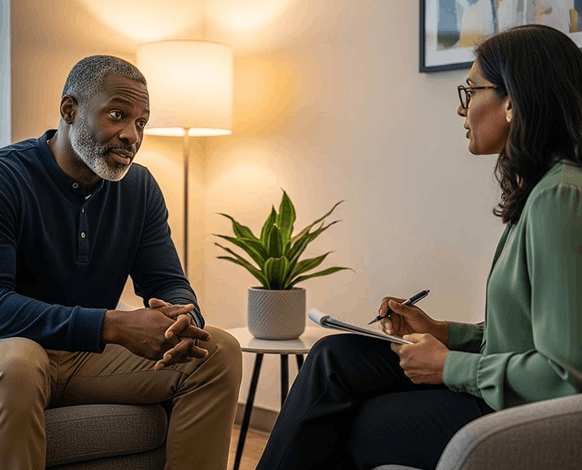
Wanting to explore additional services besides LGBT therapy? We believe in supporting a person’s whole identity. This is why we also provide therapy for those in the BIPOC community and those who are neurodivergent. At our Asheville, NC-based office we offer anxiety treatment, depression treatment, mood and bipolar disorder treatment, and trauma and PTSD Therapy. As well as couples therapy and marriage counseling to support your relationship. To help you include our services in your busy life we offer online therapy in North Carolina.
We accept payment through a HIPAA compliant payment processing software.
This ensures that your financial information remains encrypted and protected.
Therapy can be vulnerable and new, so it’s natural to be nervous. It can be scary to think of opening up or crying in front of someone new, perhaps fearing that it will be awkward and uncomfortable. The fear around that can feel overwhelming. Getting the counseling we need can be challenging. And although it’s normal to be nervous, that doesn’t make it feel great. It takes courage to continue getting the help you need.
Therapy is a space where you can be yourself and feel safe from judgment, including feeling nervous. We’re committed to finding a way to care for your nervousness and ensure sessions are as comfortable as possible.
We’re here if you want to talk about it during a free phone consultation.
Take your time to read through this website. If you sense that we may be a good fit based on what you are reading, you can call us.
During a free phone consultation, you can ask one of our therapists about how they have helped other people like you before, ask how they work as a therapist, or any other questions you may have that are specific-to-you. You’ll also be able to tell them what’s up, and you and one of our therapists can decide together how they can help.
It will usually take a couple of sessions to feel comfortable and develop a relationship. During the sessions, you’ll be able to understand how comfortable you feel in sessions. Our approach is not going to work for everyone. What’s most important is that you find someone who you feel is the right fit for you. We can explore that together.
If something feels overwhelming or even terrifying to discuss, that’s actually very normal. It can often feel difficult to talk about some things. During sessions, your therapist will never push you to talk about things that are too painful for you to talk about. They will be there to guide you towards discovering what feels comfortable for you to share. Working at your pace, together you can look at the tough stuff if you’re ready.
You can also share with them that you are nervous to open up about something, and you and your therapist can talk about that too. Whatever is present for you. Whatever you are going through. Bring that to session and you can explore that together.
If you open up, we will not think you are crazy. We will think you are someone who’s very courageous. Many clients have had the same fear (that people would think they are crazy).
Through our own life journeys and working with clients, we know how “normal” your experience is.
You’re not being dramatic or “too much.” Nothing you can say will cause us to judge you.
We know nobody’s perfect. We all struggle. We all suffer in different ways.
Whatever it is you’re going through, we provide a safe space where you can feel heard and supported without judgment.
You might already know that you want to share sensitive information about your loved ones and you don’t want them to find out what you’ve said. So we want you to know that unless there is an imminent danger to yourself or someone else, everything you share is completely confidential.
There is nothing more important than your privacy.
You can rest assured that you can talk about anything without fear of that information getting out.
If you have specific questions about how confidentiality works, you can ask during your free phone consultation or anytime during your work with your therapist.
Overall, you can think of the first session as a structured assessment that helps your therapist get to know you and the challenges that brought you into treatment. They’ll invite you to share more about yourself, and you can also talk about what’s worked or not worked for your mental health in the past.
Some questions that your therapist might ask during a first session include:
You can ask your therapist questions as well. You might be curious about their experience or how future sessions work.
The most important part of a first session is that you see if you feel your therapist is a good fit for you. If you feel supported, seen, and at ease with them, you can discuss if you’d like to meet again.
Sometimes the hardest part is getting started. We’re here to make it easier with a free consultation—just a conversation, no pressure, only support.